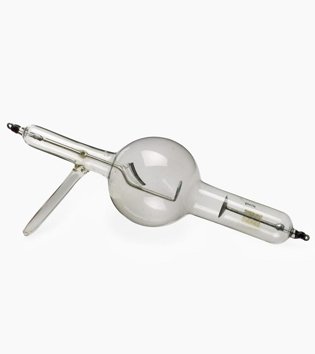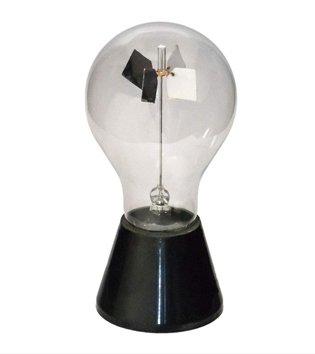
Apparatus Type: Evacuated glass bulb with internal rotor assembly.
Rotor Assembly: Four lightweight metal vanes, mounted on a central spindle.
Vane Coating: One side of each vane is blackened and the opposite side is polished.
Required Energy Source: Operates when exposed to any strong source of electromagnetic radiation (visible light, infrared heat).
Internal Pressure: Contains an internal partial vacuum (low pressure), which is essential for the molecular repulsion mechanism to function.
Visual Energy Conversion: Offers a clear and dramatic demonstration of how light and radiant heat energy can be directly converted into mechanical rotational energy.
Kinetic Theory Illustration: Excellent apparatus for illustrating the kinetic theory of gases and the effect of molecular collisions in a low pressure environment.
Sensitive Operation: Highly sensitive rotor design ensures that even low levels of ambient light or heat are sufficient to initiate rotation.
Low Friction Build: Features a precision engineered, low friction spindle bearing to minimize energy loss and maximize the rotor spin speed and duration.
Durable Construction: Built with a robust, evacuated glass bulb to maintain the necessary partial vacuum required for the effect, ensuring long term operational reliability.
Apparatus Type: Evacuated glass bulb with internal rotor assembly.
Rotor Assembly: Four lightweight metal vanes, mounted on a central spindle.
Vane Coating: One side of each vane is blackened and the opposite side is polished.
Required Energy Source: Operates when exposed to any strong source of electromagnetic radiation (visible light, infrared heat).
Internal Pressure: Contains an internal partial vacuum (low pressure), which is essential for the molecular repulsion mechanism to function.