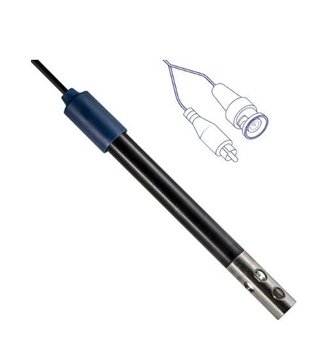
Apparatus Type: Two electrode glass cell for measuring electrolyte conductance.
Electrode Material: Typically Platinum (often platinized with platinum black).
Cell Constant (K): Available in standard values such as 10 cm-1, 1 cm-1, or 0.1 cm-1, depending on the desired measurement range.
Temperature: Suitable for use across a wide laboratory temperature range, typically 0 degrees C to 100 degrees C.
Application: Used for conductometric titrations, measuring equivalent conductance, and quality control checks.
Precise Cell Constant: Engineered with a fixed, highly accurate electrode geometry to provide a known and stable cell constant, ensuring reliable and repeatable conductivity measurements.
Inert Electrodes: Typically features platinum black electrodes which are chemically inert and have a high surface area to minimize polarization effects during measurement.
Durable Glass Body: Constructed from robust laboratory borosilicate glass for chemical resistance and thermal stability during experimental procedures.
Easy Solution Access: Designed with an opening or funnel top for easy filling and rinsing with the electrolyte solution being tested.
Standard Connection: Equipped with secure, standardized external terminals for quick and reliable connection to a conductivity meter, resistance bridge, or LCR meter.
Apparatus Type: Two electrode glass cell for measuring electrolyte conductance.
Electrode Material: Typically Platinum (often platinized with platinum black).
Cell Constant (K): Available in standard values such as 10 cm-1, 1 cm-1, or 0.1 cm-1, depending on the desired measurement range.
Temperature: Suitable for use across a wide laboratory temperature range, typically 0 degrees C to 100 degrees C.
Application: Used for conductometric titrations, measuring equivalent conductance, and quality control checks.